Life Longevity linked with a Plant-Based diet in Seventh-day Adventists

Good Afternoon Everyone! I hope that you and your families are staying safe and healthy! Speaking about healthy, today we are going to be talking a little bit about life longevity and disease prevention through a vegan and vegetarian diet. A few months ago, I had written another post about curing illnesses through veganism (go check that out if you haven’t already!), but today I would like to speak to another aspect of this: life expectancy and increasing human lifespan through a vegan diet.

Now, it is no secret that plant-based diets are good for your body’s inner organ functionality, but another great aspect to this type of lifestyle is that they also make you look good on the outside. I’ve seen so many stories on the internet of people losing X number of pounds after turning vegan or vegetarian and even looking younger after making the switch. Now, why is that? The truth is, when you turn plant-based you most likely are making the switch from high-sugar, high-carb foods to foods that are more-fibrous, nutritious and that are going to keep your tummy satisfied longer. For example, sugar-packed beef-jerky gets replaced with carrots and hummus, or cookies and milk is substituted with walnut date cake. The foods that become the replacers are far more nutritious, healthy, and wholesome for your bodies that makes you lose the extra weight, making you feel better about yourself.

There is another aspect to this, of course. And that, my friends, is increasing the number of years you live by serving your palette only nutritious, plant-based foods. To this, I will be speaking about the Seventh-day Adventist Church as our prime example. For those of you who don’t know who the Seventh-day Adventists are, they are a church based on beliefs in abstaining from harming yourself and other life forms, whether that be through consuming a plant-based diet, avoiding smoking and alcohol, and exercising-this group seeks to avoid any form of activity that is harmful or “mind-altering” to your physical well-being. Culturally, Seventh-day Adventists believe in balance and harmony between nature and its beings and therefore mostly all of its disciples follow a vegan diet. They originated as a Protestant Church, beginning in the formative years of the United States and continue to serve as a freedom-based group today.
Beginning in 1958, a study was conducted on this group of individuals by the Loma Linda University in California to determine whether vegans and vegetarians live longer than the rest of the average human population. The results from the study generated a positive response, with evidence claiming that vegans and vegetarians live up to at least six, sometimes even up to nine, years longer than the average meat-consuming human. Today, the university continues to conduct their research and are finding new and fascinating information about this vegan group: they have conducted weight studies estimating that the average vegan is, by weight, 30 pounds lighter, have a lower Body Mass Index (BMI), and are less insulin-resistant, meaning they are less susceptible to Type 2 Diabetes, than their meat-eating counterparts. Yes, you may argue that the Seventh-day Adventists also abstain from other harmful health practices, such as smoking and drinking caffeine and/or alcohol, but there is significant evidence to prove that food choices play a notable and determining role in both life expectancy and quality of life that these individuals lead.

If you are interested in learning a little more about health benefits of veganism and some amazing stories of people who have been able to change their quality of life, I suggest you check out the following documentaries on Netflix:

  • The Game Changers
  • What The Health
  • Forks over Knives

These are great documentaries that expose some of the scandals of the meat industry and bring to light many of the benefits of a healthy, wholesome vegan diet. Thank you all for joining me today, I wish you all a wonderful day!

Sources:
Facing the facts: Is vegan protein really protein at all?

I think that one of the major concerns that people have when considering a plant-based diet is protein. In fact, I get told this all the time! I was picking up a vegan burger from a restaurant near my house the other day and the waitress at the front desk said to me, “I’ve been considering going vegan for a while but I just can’t give up chicken. I don’t want to have to eat tofu all the time.” I almost felt sorry for her when I heard this. It’s as if humans are programmed to think that our entire diets are supposed to revolve around protein. Which isn’t true! But for those of you who do think this way, let’s take a look at the facts.

First things first, are vegans protein-deficient?

It has been known for a long time now that humans are not programmed to eat meat-this myth has been debunked by many dieticians in the debate between a plant-based versus meat diet. In fact, we are not a carnivorous species. And here’s the thing, protein deficiency is not a thing. At least it’s not in the United States. For the average human to stay healthy, they only need 0.8 grams of protein per kilogram of body weight a day. To put that into perspective, a person weighing 150 pounds, only needs about 54 grams of protein. My double-A batteries weigh more than that! So no ‘more the merrier’ business. Doesn’t matter if you’re vegan or not, we are getting more than enough protein.

Now you may ask, but are plant-based sources of protein providing our bodies with the same nutrients as their meat counterparts?

Well, no. They provide more and that’s because plant-based protein sources are not fundamentally built up of the same amino acids as meat. Remember, meat is animal-based while plants are earth-based. Whatever nutrient we derive from plants, we derive directly from the earth. But when you buy animal protein, you’re also buying their saturated fat, cholesterol, hormones, and the other little surprises that come with it. You are almost never buying the protein itself. Consuming meat sources of protein can hence be extremely harmful to your cardiovascular health and even lead to cancer in extreme cases. We need to remember to fill our bodies with nutritious sources of food-plant-based or not. Think of it this way: our bodies aren’t dumpsters for extra landfill. They give back to us whatever they have to work with. So, in simple words, make sure you are checking nutrition labels before you buy any source of protein.

So, what are the best sources of protein for plant-based eaters?

My personal favorite-lentils. But there are also so many more options today! Companies today are manufacturing the novel “impossible burger” which is a plant-based burger that tastes just like a hamburger but uses soy protein instead of beef. There are also others: tofu, pea protein, nuts, and-another emerging superfood-quinoa. When you eat plant-based protein the benefits are endless. You aren’t just satisfying its daily intake of protein but you are also filling your body with vital nutrients at the same time. It’s better for you and it’s benefiting your body simultaneously.

I hope you enjoyed my take on protein for this week. Thank you all for joining me, Namaste.

Sources:

Medical News Today

One Green Planet

Pythagorus the Mathematician was a Vegetarian

You know what the Pythagorean Theorem is, right? Who doesn’t? It practically gets hammered into our brains by the time we reach grade school. “a^2 + b^2 = c^2” and its inventor, Pythagorus, practically live with us until we don’t need math anymore, which is-well-never! Greek mathematician and renowned philosopher Pythagorus is known for his widespread contributions to the studies of mathematics, the sciences, and philosophies which still hold true in practice today (just like the Pythagorean Theorem.)

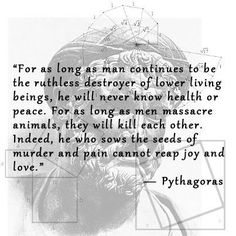
But did you know that Pythagorus, a celebrity in the sphere of Greek mathematics, was in fact a vegetarian? In fact, he came to claim his own “Pythagorean Diet,” which is the modern day vegetarian diet, converted in the mid-1800s when the movement for rejecting animals as a form of sustenance began to grow. While his contributions in the space of geometry have been remembered and cited over and over again in textbooks, encyclopedias, and even showcased on the internet, his philosophical ideas on those of animal well-being and spirituality, sadly, have failed to gain the same distinction today.

Pythagorus’ rejection for eating meat came out of a place of ethical considerations and spiritual value. He, like many of his later successors, believed that all life was life regardless of whether it was human or animal. After all, he saw that, humans are animals too. Eating one another would simply cause more harm than good because eating another life, or soul, is morally wrong. In fact, he saw that consuming meat was a fundamental element in the waging of easily avoidable wars between different factions. 

At its core, consequently, Pythagorus saw all life revolving around the soul. He believed that there was a higher reality in which the soul could transcend into if it was pure enough. He saw that consuming animal flesh was repeatedly aggravating humans and putting them against one another, dismantling the balance of peace on earth and hence hindering their souls from reaching this ulterior zone.

This transmigration of souls, which Pythagrous believed in, is known as metempsychosis. In further detail, this process is described as the repeated shift of souls going interchangeably between humans and animals in every single rebirth. It is a concept argued for in many religions, such as Hinduism and Buddhism, where reincarnation is a factor in the present life itself. For Pythagorus, in order to avoid the risk of having a great ancestor appear on his plate as a hefty piece of steak, he decided to skip the dish all together and opt for a diet consisting solely of bread, honey, and vegetables; his disciples continued to carry on this diet even after his passing. More than what harming an animal does for their well-being, Pythagorus was concerned with what it did to the human morale and psyche-it simply disrupted its peace and balance. Today, there is still a lot for us to learn and follow from the principles of Pythagorus!

Veganism is not a new concept. Contrary to what pop culture may say, vegan diets have persisted, it’s safe to say, since the beginning of human existence, while their counterparts, the meat-consuming, carnivorous diets, not so much. Think about it for a second: is it easier to eat a stationary plant or a moving, walking, breathing being? Probably the former. And the early humans were certainly not trying to make their lives any harder by chasing after these animals. So a plant-based diet was one that was best suited for their needs and day-to-day activities. Though we can’t do much about the media-facade that meat was made for humans, we can take actions to promote the beliefs of veganism, both spiritually and physically. Think like Pyathagorus-put the world at peace not at war. Thank you for joining me today. Namaste.

Sources:

https://www.history.com/news/beans-and-greens-the-history-of-vegetarianism

https://spoonuniversity.com/lifestyle/how-the-ancient-greeks-felt-about-vegetarianism

https://www.businessinsider.com/the-story-of-one-of-the-worlds-first-modern-vegetarians-2016-3

https://www.gettyimages.com/detail/news-photo/pythagoras-ancient-greek-philosopher-and-scientist-news-photo/113634605

Quarantine is a gift in disguise for wildlife

There’s a hushed silence on the streets. Cars on the busiest streets of cities don’t sound their horns anymore and their partners-in-crime, the on-the-go, chattering pedestrians, are no longer seen on the sidewalks. The bright, radiant yellow of school buses and tiny backpacked figures stalling and waiting for them have disappeared all together. The sun outside seems brighter nowadays and the sounds of crows flapping their wings is more audible now than ever. What has happened?

Quarantine, or a restraint upon the activities or communication of persons or the transport of goods designed to prevent the spread of disease or pests, as defined by Merriam-Webster is now having the most beneficial, unintended impacts to the planet. These impacts are working better than any plan that humans could have come up with ourselves. The earth has begun to naturally heal itself. Now don’t get me wrong, the recent news of the coronavirus is horrible in so many ways-the economy is being affected in countless ways, people are unable to work at their usual jobs, and schools are shut down-but the way I see this virus, is one that is enabling humans to see the toll of their actions on the surrounding environments and the planet knowingly or unknowingly.

As humans are being increasingly confined to their homes, carbon emissions are reducing in areas where air pollution was initially a major issue. In highly industrial areas, such as China and Italy, nitrogen dioxide levels have heavily reduced as a result of less manufacturing, air-borne traffic, and vehicular traffic. In Venice, the once polluted canals filled with trash, have begun to clear up where now even wildlife is visible from the docks. This has also led to an improvement in water quality. As for wildlife, animals have begun to come outside of their natural habitats. Also, many animals that were once nocturnal have begun to roam the streets in the daytime in the absence of humans from the streets.

One of the main goals of veganism is to preserve wildlife and help the animals around us. But above being vegan, I see it important for humans to observe their daily actions and determine whether they are helping the environment or not. For some people, being vegan is a good method to ensure that they are conserving the planet every time they put food in their mouths. For others, they may donate to wildlife preservation centers. And still other people may find their own ways to help save the planet around us. In all cases, the ultimate conclusion that humans have come to is that whatever actions we take, it must be for the benefit of the entire planet or else we will end up hurting ourselves. In that sense, the effects of the coronavirus, from an environmental perspective, have benefitted the natural state of the planet. As I said earlier, if we leave mother nature by herself for a while, she will heal herself and make this world, and leave it an even more beautiful place than before. 

Thank you for joining me today! If you want to learn more about the coronavirus and any updates you can do so by visiting this link: https://www.nbcnews.com/health/health-news/live-blog/2020-04-13-coronavirus-news-n118276

Sources: https://www.newsweek.com/coronavirus-major-impact-environment-co2-air-quality-animals-1493812

Veganism through Artwork

As we move into a world that is rapidly digitizing and where even education is shifting to one that is visual-based, we, as a society, have switched to using art as a tool to convey powerful messages and ideas. Art is a powerful instrument because it transcends the language barrier and communicates to masses of people with just pictures and visuals. And just as art was a staple part of nearly every culture in the world centuries ago, it has remained a critical part of our culture today. From WW2, when Rosie took her claim to fame in the famous “We can do it” propaganda poster to now, where artists create their masterpieces online through digital tools, art has persisted even in American culture. Artists today are able to communicate powerful messages through their artwork through the use of different genres even. For example, surrealism is a genre of art that goes beyond traditional methods and ethics of the tangible world and transports viewers to a completely different light. It is art like this that leaves an imprint on us. This method is no different for our fellow artists in the vegan community. As we move to a more web-friendly environment, vegans who champion animal rights seek to convey powerful messages are now more than ever able to do so through touching works of art. And not only is this true in the vegan community, but everyone in the world can use it to gain support, following, or to simply leave a message. Art, in other words, is a campaign in itself for causes even beyond veganism. Today, I am going to walk you through some of my favorite works by some of my favorite artists and show you my take on the artist’s original intent behind each.

1) Pals. Palatable? By Dana Ellyn

I personally connect with this painting because this is the story that I am most often reminded of when people tell me why they went vegan/vegetarian. “I love animals too much,” is one of the most popular answers you will probably get from a person who turned vegan. I believe that one of the main symbolic elements of this painting is mere hypocrisy. How can one, who loves an animal so dearly, resort to eating an animal at the exact same time? This painting evokes emotions which remind the viewer of the exploitation of animals in our daily life.

2) Vegan Sidekick

The Vegan Sidekick is a famous cartoonist who has gained popularity for his cartoons in recent years. What started off as a hobby posting these cartoons on social media for fun, the cartoons now deliver strong messages to the public and in which the characters mimic real life people. In this particular cartoon, we see the widespread misconception that going vegan is unhealthy as compared to one that is not vegan. Then again we must remember that anything and everything can be unhealthy for us. We have to take a step back and analyze the foods that we are putting into our bodies. Is this healthy? Is this filling our body with vital nutrients? Is this good for our bodies? In this case, the non-vegan was shown a hypocrite because his other non-vegan counterpart came in eating burgers and fries, which isn’t the healthiest option out there. Here’s a reminder of our motto: “Eat Clean. Eat Green.” To be able to eat clean and green, we must ensure that we are consuming nutritious foods that are suited for our bodies.

3) Rafał Olbiński

This is truly one of my favorite artworks because it speaks not only to veganism but addresses environmental issues along with it. This piece portrays an upper class woman who is eating as she pleases at the expense of the entire planet, the animals in the forests, and the plants that are growing in them. I believe this piece of art demonstrates the toll that our actions, as humans, take on our surrounding environment.

Looking at these works remind us that there is a community of artists out there who can change the world through the action of art. As many of you may have heard, “actions speak louder than words.” The act of these artists painting such powerful messages is transforming the world for vegans today and leaving the planet a more healthy and sustainable place for the generations to come. That is all for this time folks. Leave a comment down below on which art piece was your favorite! 

Sources: https://www.plantbasednews.org/news/8-vegan-artists-whose-work-will-blow-your-mind

Curing illness through Veganism

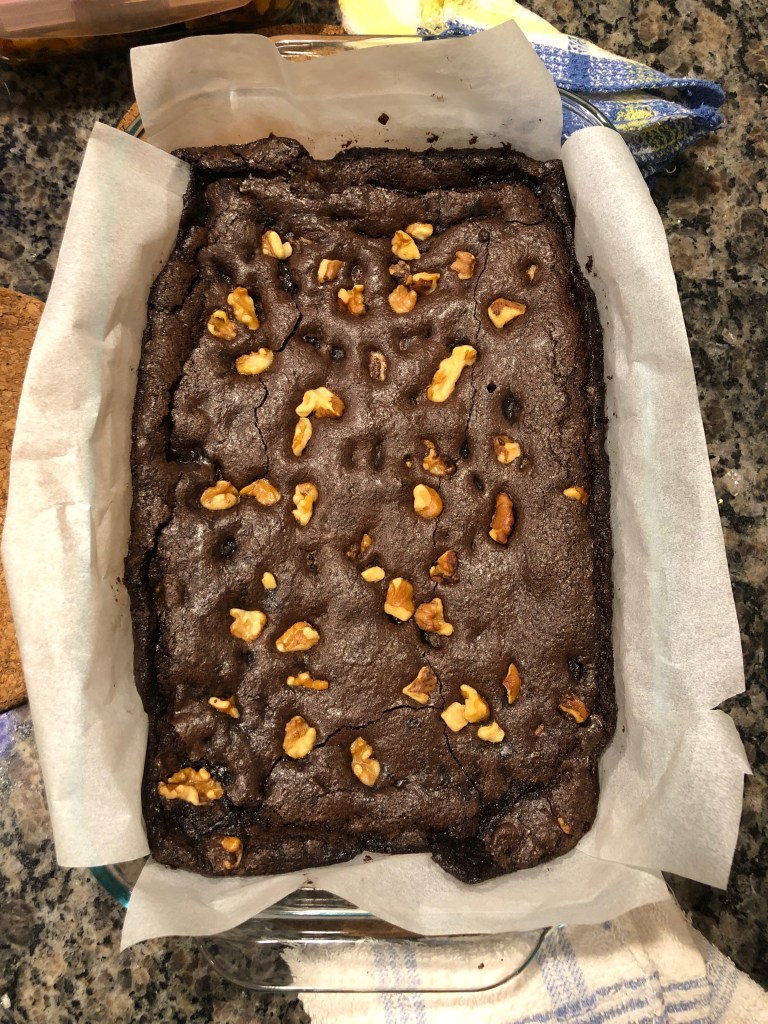
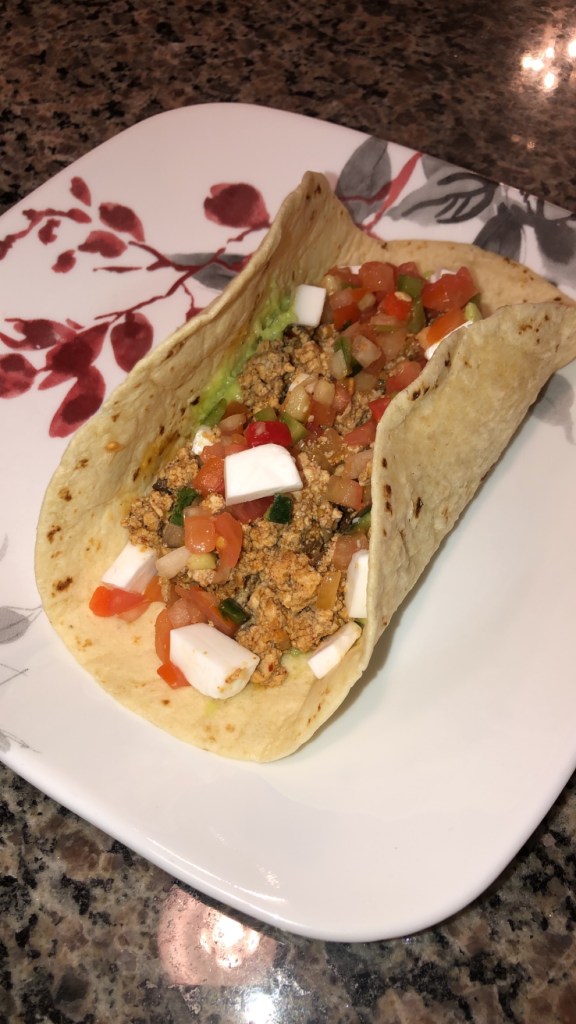
Hello crew! I hope all of you are having a safe and relaxing time with your families in the midst of COVID-19. This week has given me a chance to reflect myself and consider all the ways that I can keep my body happy and healthy. I have spent the past week creating vegan recipes and experimenting with food. I have attached some pictures of my creations down below. If you would like to check them out, here are a few of my favorite recipes from a few of the food blogs that I follow:

Tofu Tacos: https://www.wellplated.com/tofu-tacos/

Vegan Brownies: https://www.noracooks.com/vegan-brownies-recipe/

With regards to COVID-19, one of the big questions that I want to focus on this week is how did the first humans use a plant-based diet to cure illness? Now, I am in no way, shape, or form saying that eating a vegan diet can cure coronavirus. That is not my intent. Instead, I want to use the current situation that we are living through right now to inform how a plant-based diet can positively impact our bodies.

Now to begin, let me preface with the statement that nearly all of our human ancestors were vegan. Yes, meat is a relatively new element in the diet patterns of humans. In the caveman times, our ancestors would consume a diet of mainly plants and nuts rather than meat. This was simply because meat wasn’t as readily available as the former. It was much more difficult for cavemen to catch a boar or hunt a lion down for dinner than to lay back and eat as many fruits, vegetables, and plants as they pleased. Consequently, as a result of this diet, our ancestors received many unintended health benefits. Amongst many of the things that they gained, they had little issues with fever, could soothe pain quickly, and had great digestive tracts.

Now you may ask, but why? What were they eating, or doing rather, that made them so robust?

One of the foods the cavemen consumed, poplar, contains painkiller salicylic acid which is the same ingredient found in aspirin today. Yes folks, you heard me right, the cavemen discovered aspirin long before modern day humans did. Crazy, right? Another thing the cavemen were able to do was use plants and herbs to their benefit to soothe their pains. These species acted like balms, healing their bodies. In addition, their vitamin-rich, fibrous diets were ideal for digestive issues as their stomachs were better able to break down the fibers in the foods they were eating.

Now I turn to another question, why should we keep this information hidden when we could be using a healthy, plant-based diet to cure our own illnesses today? Okay yes, maybe we don’t have to eat poplar because we have aspirin available today and maybe we don’t have to use herbs to soothe pains because we have aloe vera lotion. But the main idea that I’m trying to get at here is that eating a nutritious, plant-based diet can have numerous unintended health benefits which are key to making our bodies more fit and healthy.

Here are some of the things that a vegan diet can do for you:

  • Reverses heart disease
  • Lowers blood pressure
  • Improves cholesterol levels
  • Reverses type 2 diabetes
  • Lowers your risk of getting cancer

Here are just some of my thoughts that I wanted to share with you today. I hope you and your family are staying safe! Till next time folks!

It’s National Nutrition Month…

It’s March. The leaves on the trees are beginning to rejuvenate, the weather is starting to get warmer, and summer seems closer than ever which means that it’s prime time to whip our bodies back into shape and set our upcoming health goals for the year. Well, lucky for you March is also National Nutrition Month-the perfect time to take a minute and think about the food that we put into our bodies every single day. But first off, what is National Nutrition Month?

The origins of Nutrition Month trace back to March 1973 when National Nutrition Month was actually called “National Nutrition Week.” In the midst of this week, the government sought to deliver nutritional messages to the public with their key slogan: “Invest in Yourself–Buy Nutrition.” Through radio announcements, bumper stickers, and advertisements, the campaign following soared with which came an increased public interest in it. The movement grew so large that the government expanded its week-long campaign to, what it is now known as, National Nutrition Month.

So in honor of nutrition month, let’s talk about some of the ways we can be geared towards nutrition under a vegan lifestyle. There is a large misconception that if you are vegetarian, vegan, or have any sort of specific diet that does not pertain to the meat/dairy food groups, you are automatically “healthy.” This is largely untrue. You can be vegetarian and still consume a very unhealthy diet. Likewise, you can be a vegan and still be unhealthy for the most part. This is because what we feed our bodies is dependent on us. I’ll give you an example. Let’s take a person and call them Shirley. Shirley eats fast food every single day-burgers, fries, ice cream, you name it. Shirley realizes that she always feels sluggish and bloated so one day, she decides to become vegan. However, while being vegan, Shirley realizes that she really misses her old diet. She thinks to herself, how can I eat the food that I used to eat while still being vegan? Suddenly, Shirley is in the grocery store isles looking for dairy-free ice cream, those same fatty burgers but vegan, and the fries that she loved for so long. While these may be better alternatives for her body, Shirley is still not eating much cleaner than she was before. She realizes that she still feels bloated and tired all the time. So where did Shirley go wrong? Shirley wasn’t “buying” wholesome, nutritious vegan foods and instead was resorting to unhealthier options.

So let’s discuss the ways that you can be vegan and nutritious simultaneously:

  1. Always choose fresh and organic vegetables and fruits over canned produce. It is more nutritious to eat produce that has not been processed with additives.
  2. Check labels! This is crucial to ensuring that you are not consuming any unwanted sugars or fats.
  3. Eat home-cooked meals with your family. This way you can know exactly what you are putting into your body and it’s a great way to help introduce your loved ones to your new lifestyle.
  4. Be an adventurous eater. Try out new nutritious foods that you would’ve never thought of eating before-they’re a great way to spice up your diet.

With just a few minor changes to the foods you purchase, your body can be healthier, happier, and brighter. Happy Nutrition Month folks!

My First Blog Post

Veganism. At its heart.

Veganism. I’m sure you’ve heard of it before. It’s that thing that everyone’s been talking about nowadays. It’s flooding magazines at grocery stores counters, making debuts into the lives of famous persona, and even transforming the way we’ve been thinking about food all along. But what exactly is veganism? What seems to be a lifestyle that, as many people I know would say, revolves around grass and leaves, veganism has come to become a widely misunderstood phenomenon. To understand this concept, let me take you back to the beginning of time; we’re talking like millions of years ago when our original human ancestors first walked this planet. Contrary to popular belief that our cavemen predecessors hunted for their source of nourishment, anatomically speaking, this is far from true. The ways that are bodies are built, more specifically looking at the shape of our molars, is indicative that our first ancestors munched on berries and shrubs rather than on big beef steaks. Okay, this is great and all, but what does this have to do with veganism? The very fact that our ancestors didn’t resort to animal sources of food means that our ancestors consumed a simple, plant-based diet and it would make sense that the bodies of modern day humans are also programmed to consume a similar diet. In other words, modern day humans are best suited to be, none other than, vegan. This is not to say that veganism condemns other lifestyles. In fact, that’s the opposite of what veganism aims to perpetrate. The idea behind veganism is incorporating more plant-based foods into your daily lifestyle to become both healthier and stronger. This is veganism-improved. So now it all boils down to what really veganism is. Veganism, according to the Merriam-Webster dictionary, is the practice of abstaining of all animal products, such as meat and dairy. It promotes causes such as saving the environment, anti-animal abuse, and body awareness and it’s impacting lives today in all sorts of ways. Even some of the most famous people we know today are vegans! These include Ellen Degeneres, Albert Einstein, and Kyrie Irving. Veganism is a revolutionary lifestyle and it’s one that’s here to stay.

About

A little bit about me:

Namaste! Bonjour! Konichiwa! I would like to personally welcome each and every one of you to my blog! My name is Sangeet, and I am an animal lover, vegan enthusiast, and, most importantly, a food fanatic. I am 16 years old and I attend Winston Churchill High School in Potomac, Maryland. I enjoy being active through my profound hobbies such as soccer and dance, learning about new things, and writing-now blogging-about my life experiences. I am excited to be writing this blog, and I can’t wait to delve deeper into exploring veganism with you.

I am a first generation Indian and I was born in California, USA. I’ve endured many moves throughout my life including Princeton, Boston, and, now, DC. Throughout my whole life as a kid I was a vegetarian. Recently in the past few years, I have made the switch over to veganism where I have found happiness and health in a wholesome, plant-based diet which is one that I plan on continuing for the rest of my life.

About this blog:

As the title says, “One Evolutionary Vegan,” will explore the concept of how veganism came to be itself. Yes, we will be creating recipes and eating lots of yummy vegan food, but we will also be talking about the health benefits of veganism from an evolutionary perspective. More importantly, we will be exploring the fundamental questions of veganism: Why were our ancestors vegan? Why are humans biologically programmed to eat a plant-based diet? Why were ancient societies and cultures almost always vegan?

I feel lucky and blessed to have grown up in a culture where vegetarians and vegans are widely embraced and where several food options are available to us. This has, in turn, allowed me to see the benefits of my diet and stick to my diet through thick and thin. Through my journey as a blogger, I will look to share my thoughts and ideas with you while hearing what you have to say. I want to share my story and simultaneously hear yours too. I enjoy connecting with aspiring vegans, vegetarians, and vegans alike and hearing what they have to say. The more we share with each other, the better we can become and we can, in turn, make this world a better place.

Design a site like this with WordPress.com
Get started